What's happening to your tree and why.
What you're actually paying for
A free estimate answers one question: what would this company charge to do work on your tree. That's worth knowing. It isn't a diagnosis.
Nobody can spend an hour investigating a tree and hand you the answer for free. So the free visit gets scoped to what it can support — a look at the canopy, a number, a proposal.
Paying for the diagnosis buys the other thing. Time to probe the soil, dig to the root collar, look at the irrigation, and work out what's actually happening. Sometimes that produces a proposal. Sometimes it produces a watering change and nothing else.
Both are real answers. Only one of them can come from a visit that has to pay for itself.
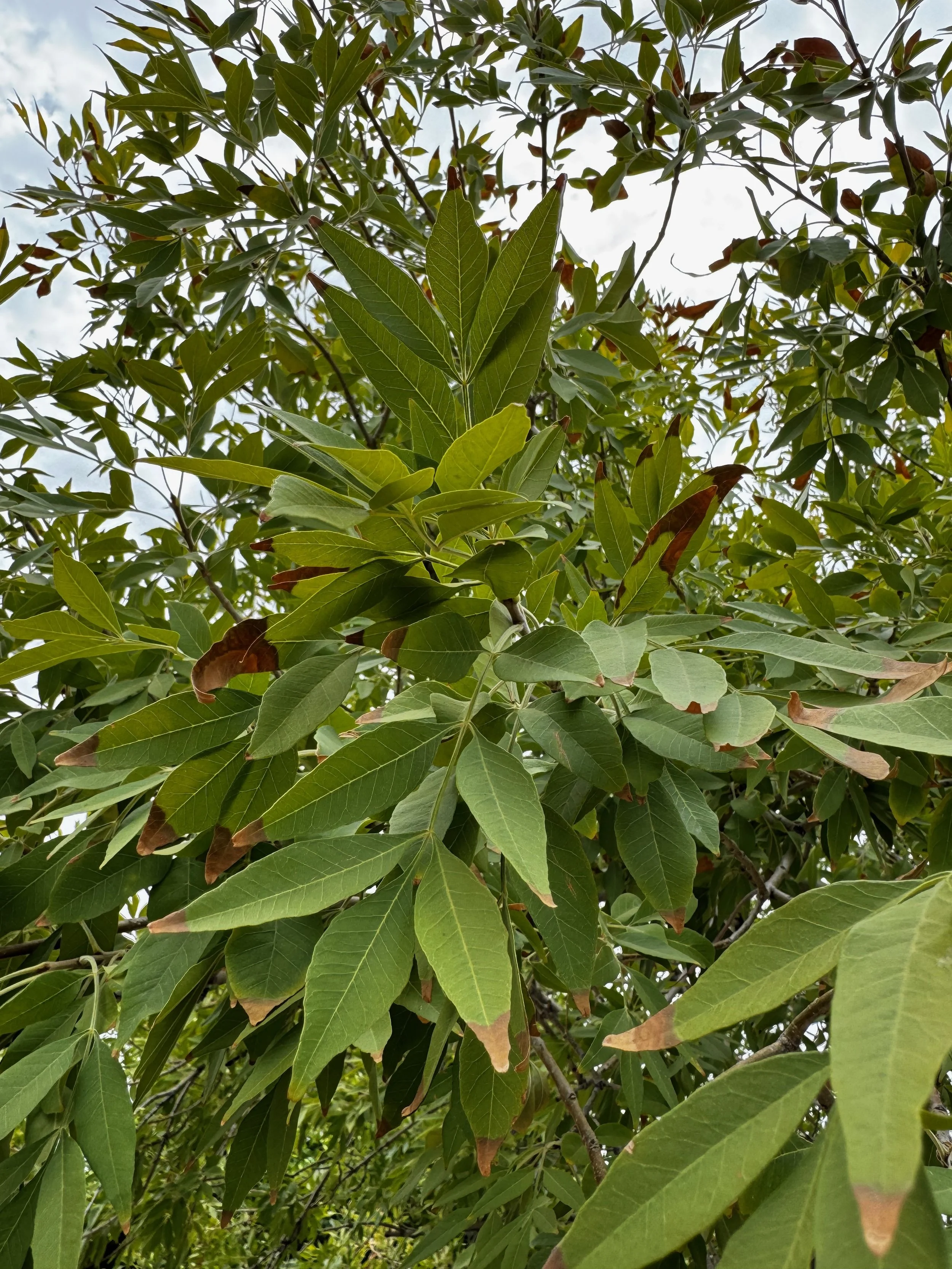
Three trees on the same street can show the same thing — thinning canopy, dieback at the tips, leaves scorched at the margins — for three completely different reasons.
One has roots severed by a trencher. One has an emitter that failed in June. One lost the tree beside it last spring and now takes full afternoon sun on limbs that spent thirty years in shade.
From the sidewalk they look alike. What they need has nothing in common.
Dieback is not a diagnosis
What I look at
-
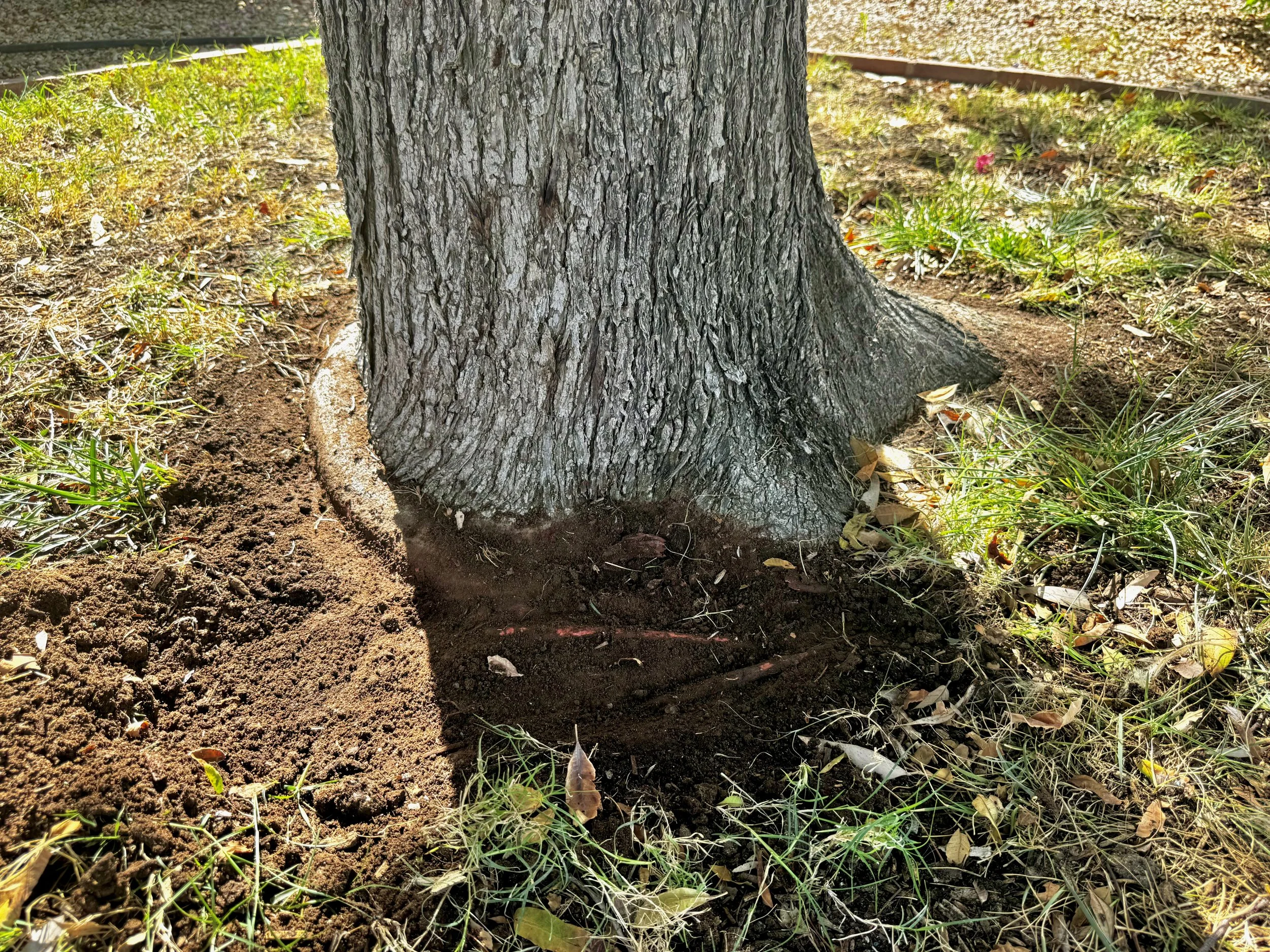
The Root Collar
Where the trunk widens into the structural roots — it should be visible above grade, and on most trees here it's buried. Bark that evolved to be dry, sitting wet, breaking down out of sight.
-
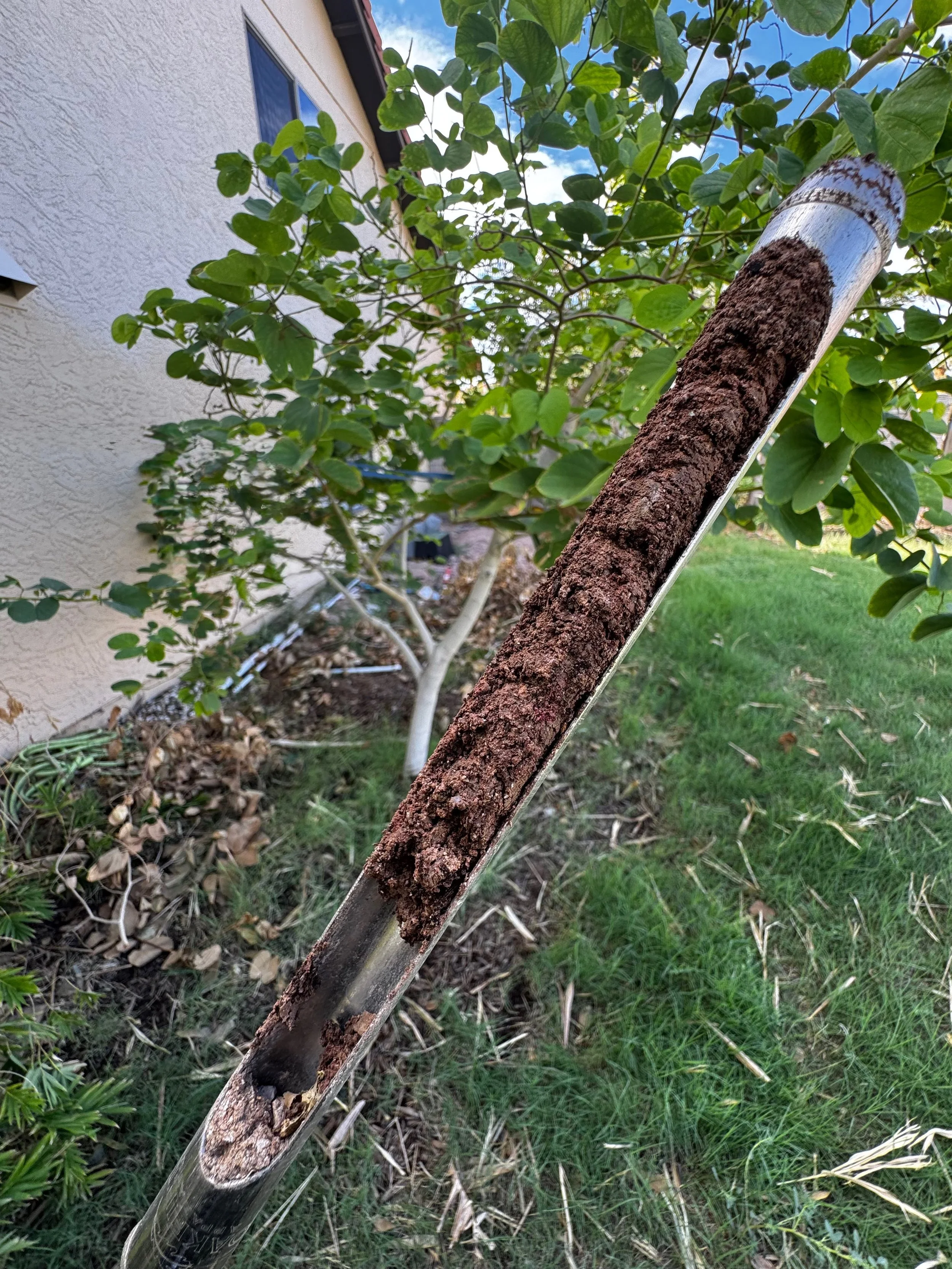
The soil, probed.
Whether water reaches depth or runs off, where compaction starts, what the roots are actually living in. On some properties a probe won't go past an inch.
-
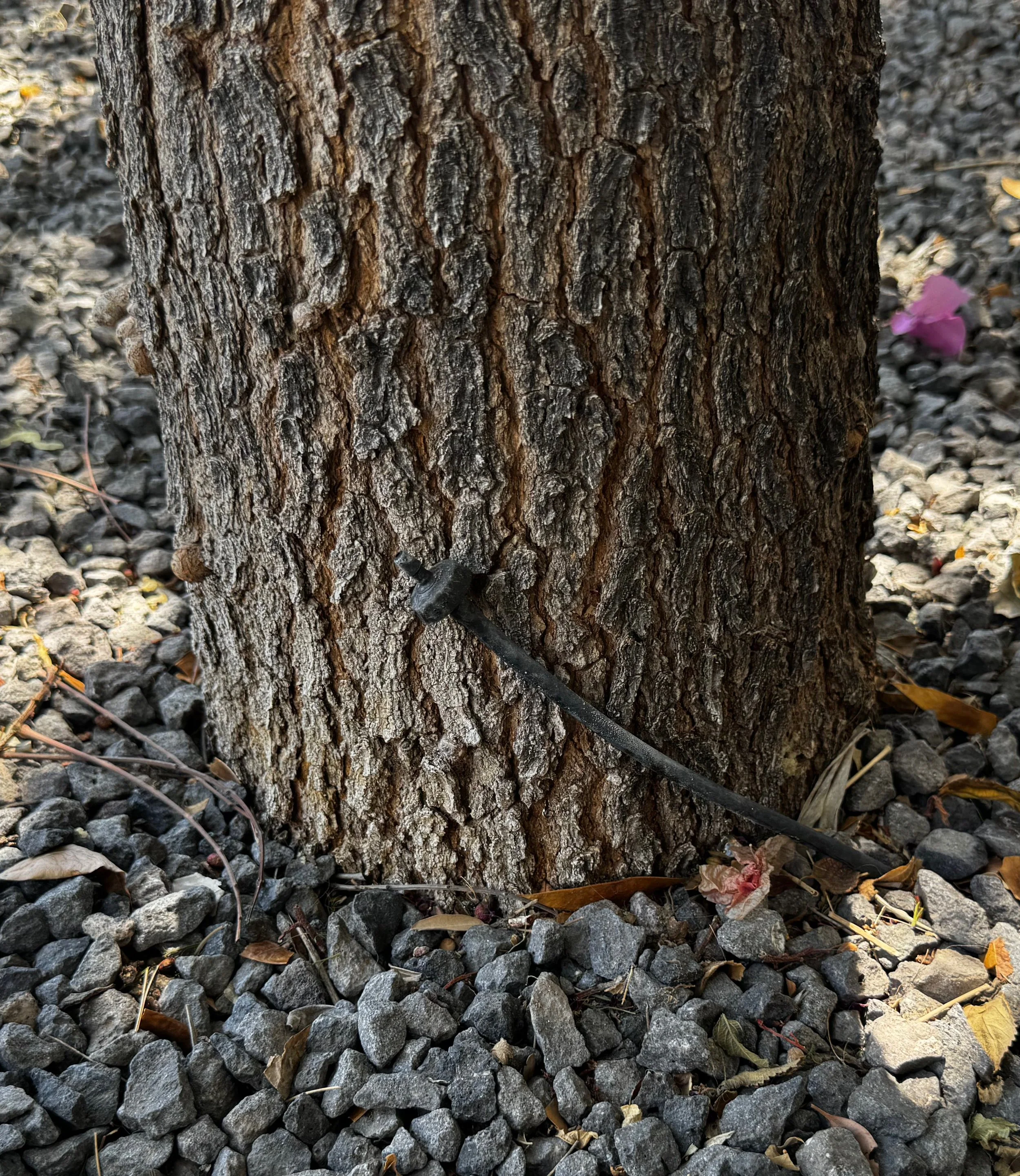
Irrigation placement and interval.
Absorbing roots are at the canopy edge and beyond. Water delivered near the trunk is water the tree can't use.
-
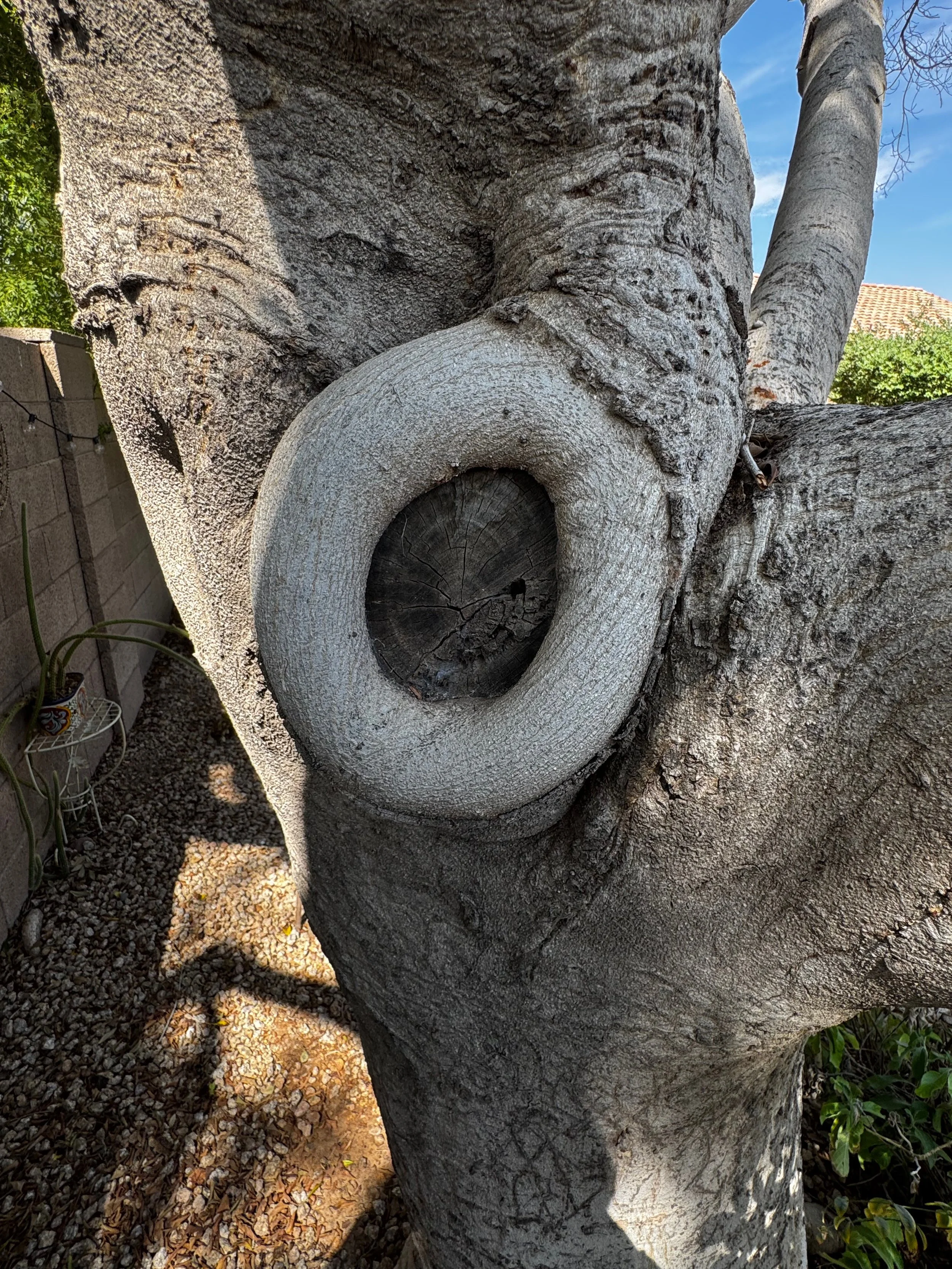
Previous cuts.
What was removed, and what the tree did in response. Old decisions are still shaping how it grows and where it may fail.
-
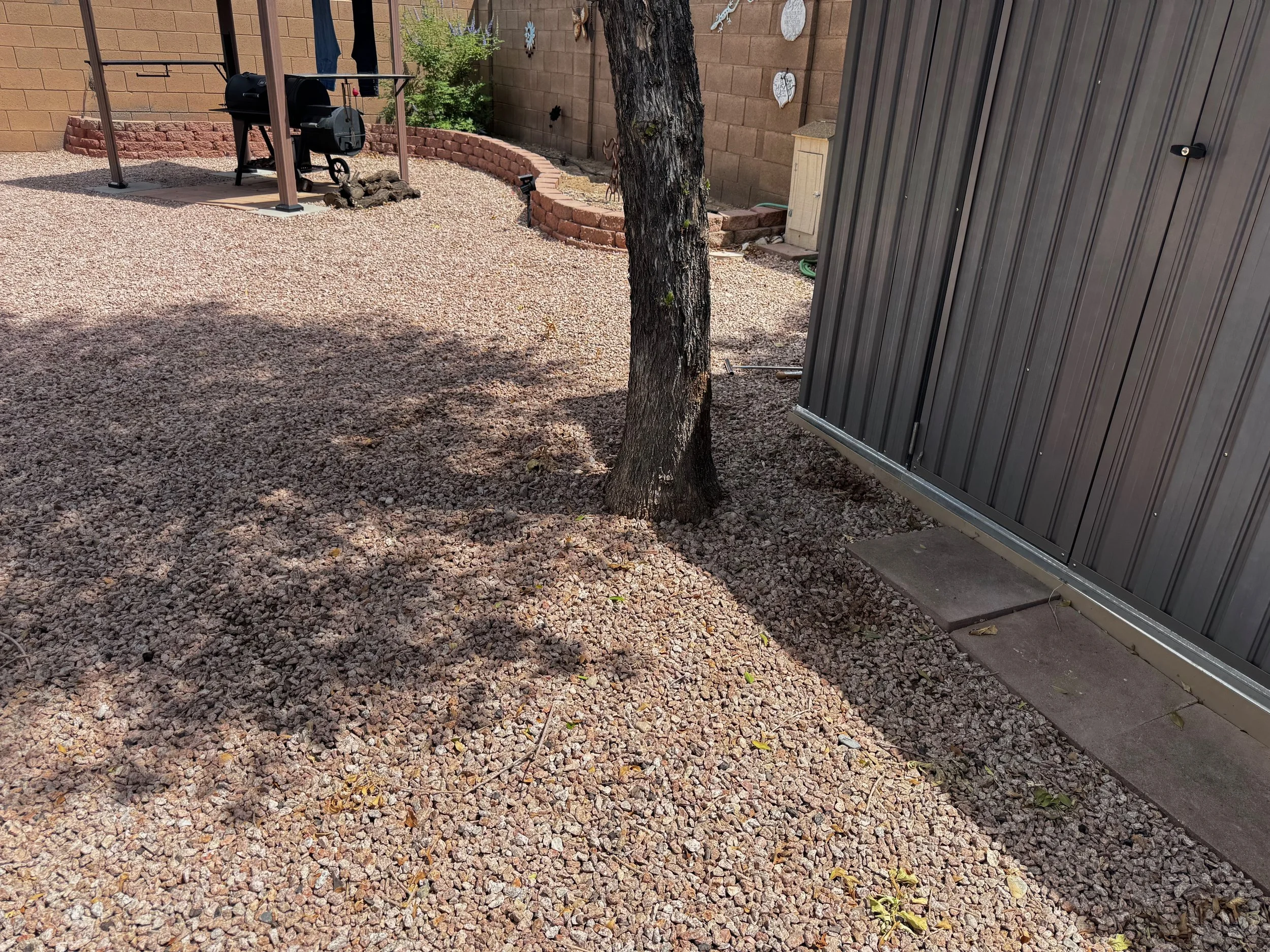
What changed nearby.
Structures and hardscape placed over a root zone don't look like a tree problem at the time. A shed pad, a patio, a trench — the damage happens in an afternoon and shows up two years later.
-
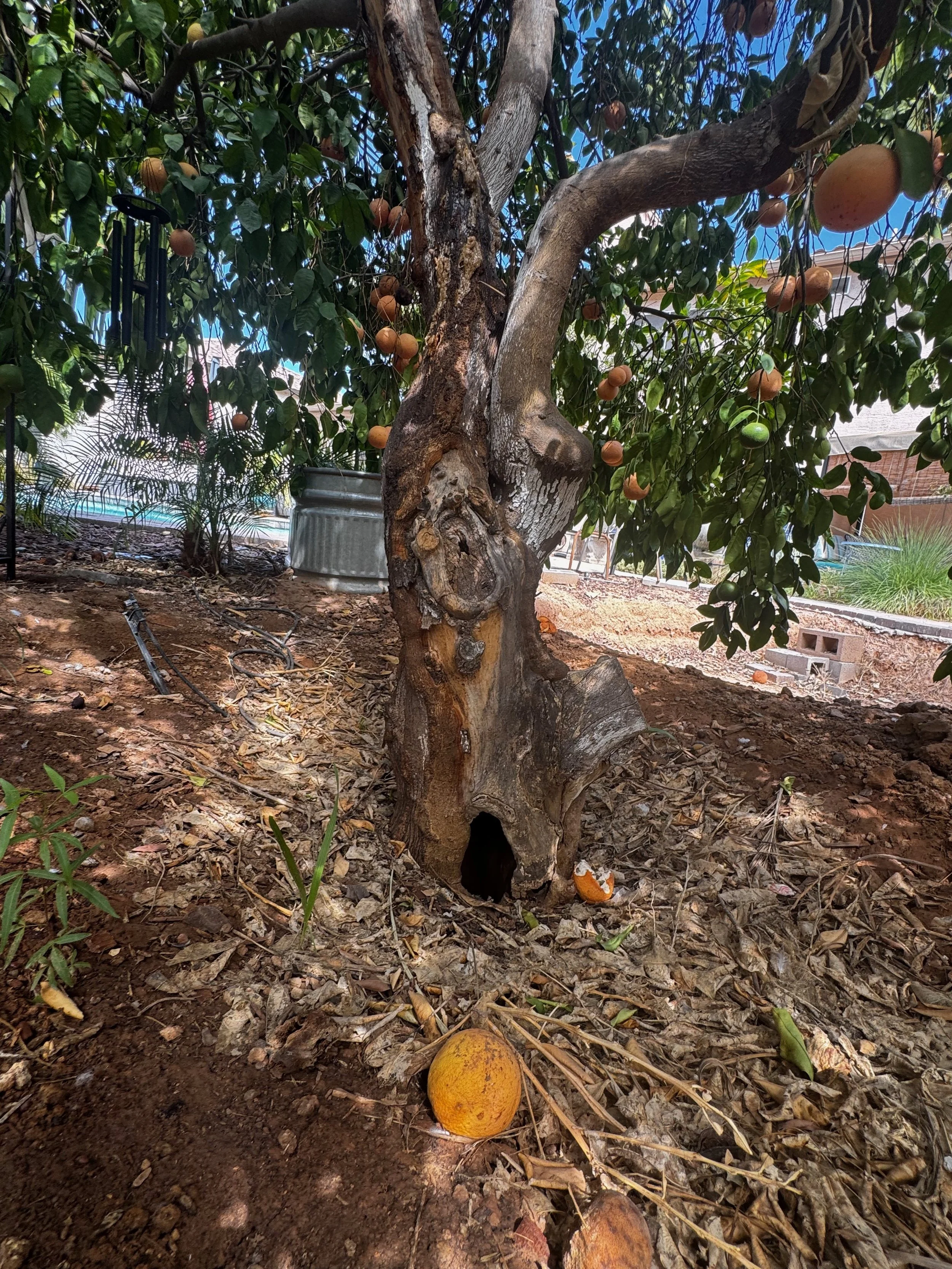
The whole tree, not just the concern.
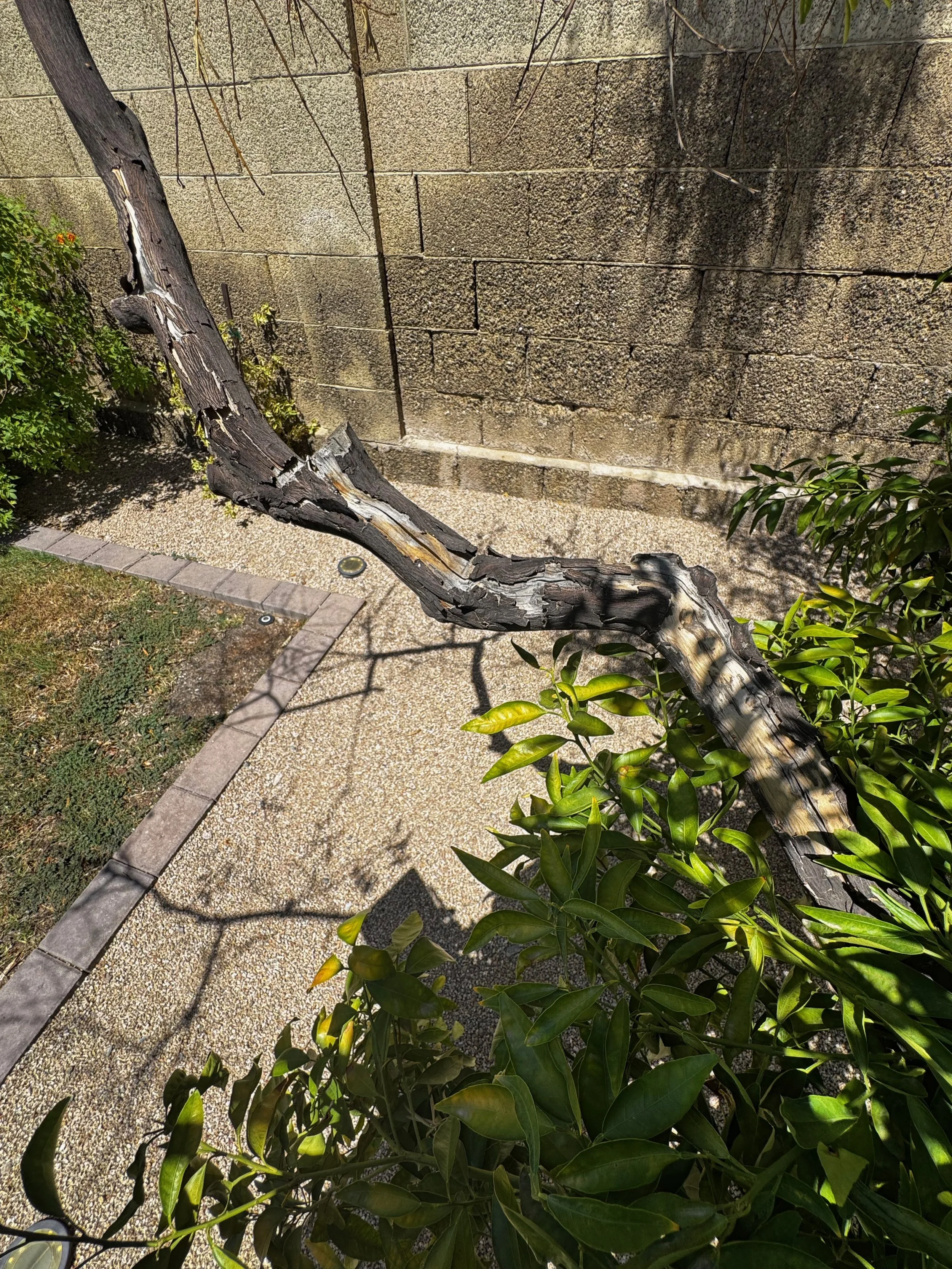
The branch you called about is usually not where the problem started.
A written assessment, delivered within a few days of the visit. It covers:
What you receive
✓
What was observed and measured, and how
✓
The likely cause, and what else was ruled out
✓
What couldn't be determined, and why
✓
Recommendations in order, with timing
✓
Photographs of what I'm describing
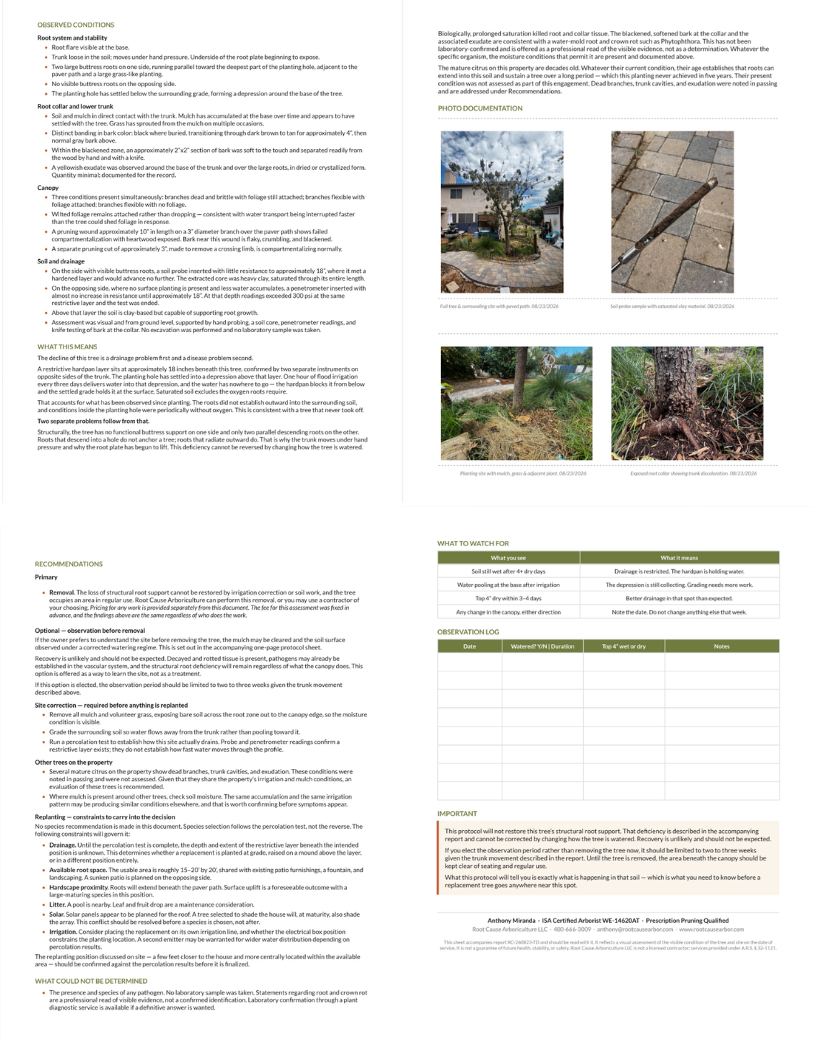
A finding I can't support with something I measured doesn't go in.
The recommendations are specific enough to act on whether or not I'm the one doing the work. Watering changes come with numbers. Pruning comes with which cuts and why. And if the right answer is to wait a season and watch, the document says so and tells you what to watch for.
You're buying an answer. What you do with it is up to you.
What it costs
$200 — first tree
$100 — each additional tree
Five or more — quoted after I know the count
Payment is due before the visit, and the fee doesn't come off the cost of work afterward.
Who does the work
Anthony Miranda. ISA Certified Arborist (WE-14620AT), ISA Certified Tree Climber, and Prescription Pruning Qualified.
The person who assesses your tree is the person who does the work.